
Loading page…
About us
Integris Digital Solutions exists to close a specific gap: the operational discipline that large organisations take for granted is almost entirely unavailable to the people working independently.
Our mission
Inside a mid-sized company, a new laptop is provisioned against a written standard. Startup services are controlled, drivers are validated, firewall policy is applied, and a support team keeps a record of every deviation. None of that is exotic. It is simply the baseline that a dedicated IT function provides.
A freelancer buying the same laptop receives a machine loaded with manufacturer bloatware, default privacy settings tuned for telemetry rather than confidentiality, and no documentation at all. The advice available online is generic, frequently unsafe, and almost never explains how to undo itself.
We provide the missing function. Clients send us a structured profile of their system; our architects analyse it manually and return a configuration blueprint built for that specific machine and workload. The deliverable is documentation and tooling the client owns permanently — not an ongoing dependency on us.
That model is deliberate. Independent professionals should be able to buy a defined outcome once, understand exactly what changed on their systems, and remain fully in control of them afterwards.
One machine that has to stay fast, secure and available. Downtime is unbilled time, and there is no internal helpdesk to escalate to.
A business running on personal hardware, where client data protection and a defensible privacy posture matter commercially.
Three to ten people on their own devices, needing one documented standard rather than ten improvised configurations.
Leadership
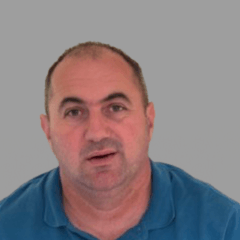
Zdravko Stojanovic
Founder & Lead Architect
Integris Digital Solutions was founded by Zdravko Stojanovic, who serves as Founder & Lead Architect. He sets the technical standards every blueprint is measured against and personally reviews the deep-analysis engagements, including the manual Event Viewer and registry work delivered under the Complete Overhaul package.
We publish this openly for a reason. Clients are trusting us with system logs and hardware profiles, and are paying before delivery. They are entitled to know precisely who is responsible for the work, under which registered company, and how to verify that person independently.
Verified profile for Zdravko Stojanovic
A change you cannot explain is a liability. Every engagement produces a written record of what was altered, the reasoning behind it, and the procedure to reverse it.
We do not take remote control of client machines. Analysis is performed on logs and system profiles you provide, and you apply the configuration yourself.
Each package states its deliverable, its price and its delivery window before you pay. There are no subscriptions, retainers or open-ended hourly work.
Configurations are built from your boot logs, Event Viewer output and hardware profile — not from generic tweak lists copied across every client.